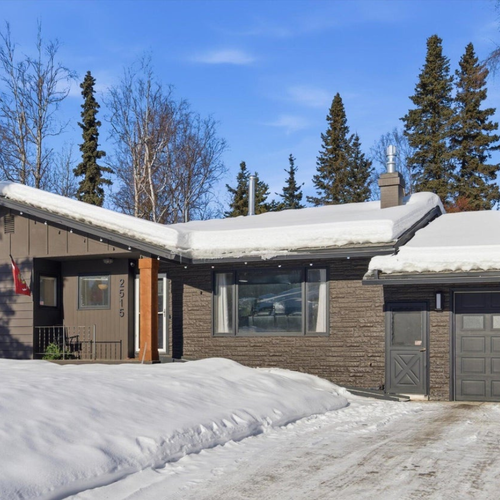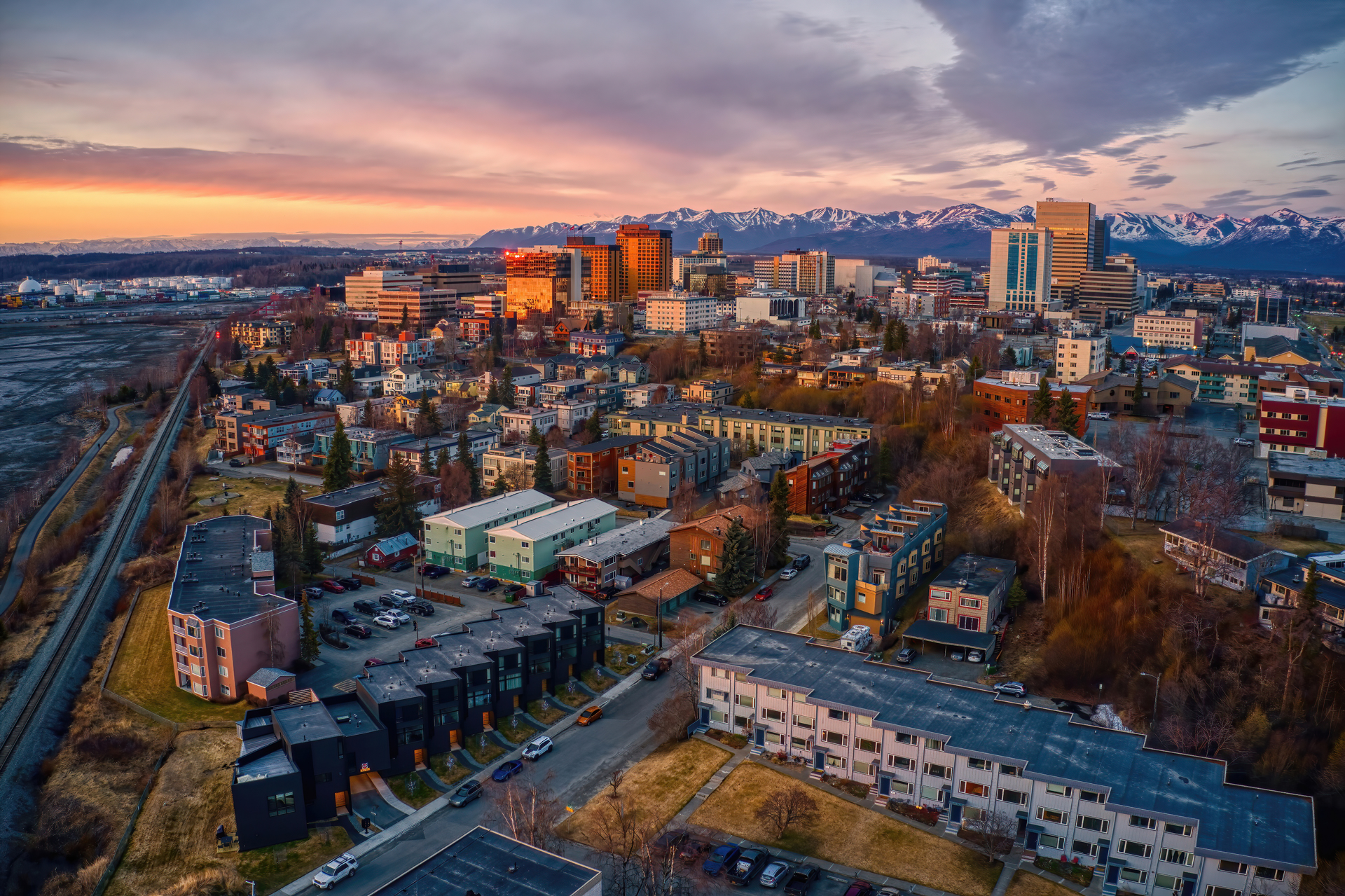
If you own a home in Anchorage — or you're eyeing a rental property in the Mat-Su Valley or on the Kenai Peninsula — the earthquake insurance question eventually comes up. It's not an easy yes or no. The premiums are steep, the deductibles are steeper, and most Alaskans go without it. But Anchorage also sits in one of the most seismically active regions on the planet, and the last two major quakes prove the risk is real. Here's what homeowners and investors actually need to know before deciding.
Anchorage Sits on Some of the World's Most Active Fault Ground
Anchorage isn't just "earthquake-prone" in a vague sense — it's built in a subduction zone, where the Pacific Plate is sliding beneath the North American Plate at roughly two inches per year. That grinding, decades-long process is what makes southcentral Alaska so seismically active. Alaska as a whole averages around 40,000 earthquakes a year, and the state has recorded more large earthquakes than the rest of the United States combined.
Most of those tens of thousands of quakes are too small to notice. But the region has produced two events that changed how Anchorage thinks about earthquake risk entirely.
The 1964 Good Friday Earthquake
On March 27, 1964, a magnitude 9.2 earthquake struck about 75 miles east of Anchorage — the most powerful earthquake ever recorded in North America, and the second-most powerful ever recorded anywhere. The shaking lasted more than four minutes. It triggered landslides that swallowed entire neighborhoods and tsunamis that devastated coastal communities up and down the Pacific coast. In total, the earthquake and its tsunamis killed about 131 people, most of them in Alaska. Whole sections of downtown Anchorage dropped and collapsed as the ground beneath them liquefied. It remains the benchmark against which every Alaska earthquake since has been measured.
The 2018 Anchorage Earthquake
More recently, a magnitude 7.0 earthquake struck just north of Anchorage on November 30, 2018, followed minutes later by a magnitude 5.8 aftershock. It cracked roads, collapsed a highway off-ramp, tore through building interiors, and rattled the city with thousands of aftershocks in the weeks that followed — seismologists recorded nearly 5,000 in the first three weeks alone. Remarkably, no one died. But the damage was extensive enough that the event led to a federal disaster declaration, FEMA-4413-DR, covering the Municipality of Anchorage, the Kenai Peninsula Borough, and the Matanuska-Susitna Borough. According to FEMA's preliminary damage assessment, nearly 2,850 residences were affected, including 46 destroyed and 638 with major damage, with total individual assistance needs estimated at over $29 million and public infrastructure damage estimated at over $48 million.
Two "worst case" earthquakes in under 60 years, in a metro area that continues to grow, is not a coincidence — it's geology.
How Often Do Earthquakes Actually Hit Anchorage?
Small earthquakes are constant. Anchorage residents feel a noticeable shake several times a year, and the broader region logs a handful of magnitude 4+ events monthly. Damaging, magnitude 6+ earthquakes are much rarer on a human timescale, but they're not rare on a geologic one — southcentral Alaska has produced multiple magnitude 7+ events within recorded history, and seismologists consider the region capable of producing another great subduction earthquake similar to 1964. The exact timing of the next major quake can't be predicted. What can be said with confidence is that Anchorage will keep shaking, and periodically it will shake hard.
What Kind of Damage Can an Earthquake Actually Cause?
Earthquake damage in Anchorage ranges from cosmetic to catastrophic, and the two 2018 and 1964 events showed the full spectrum:
- Cosmetic and minor damage — cracked drywall, broken dishes, toppled furniture, hairline cracks in exterior walls.
- Structural damage — cracked foundations, shifted framing, chimneys separated from the house, broken gas or water lines.
- Major structural failure — walls or floors that fail, foundations that crack through, homes that become uninhabitable and take more than a month to repair.
- Total loss — homes that collapse, or where the structure is damaged beyond economical repair, often due to soil liquefaction, landslide, or ground displacement — the same mechanisms that destroyed neighborhoods in 1964.
FEMA's own damage categories from the 2018 event (destroyed, major damage, minor damage, and merely "affected") illustrate how wide that range really is — and how a single earthquake can produce every outcome on that list across different homes on the same street, depending on soil conditions, foundation type, and construction quality.
What Is Earthquake Insurance, and When Does It Kick In?
Standard homeowners insurance in Alaska — like almost everywhere in the U.S. — excludes earthquake damage entirely. If your foundation cracks or your chimney collapses in a quake, your regular policy typically won't pay a cent toward that damage. Earthquake coverage has to be purchased separately, either as an endorsement added to your existing policy or as a standalone policy.
Earthquake insurance activates when ground shaking from a seismic event directly damages your covered property. It typically covers:
- Damage to the dwelling structure itself
- Damage to other structures (garages, fences)
- Personal property damage
- Additional living expenses if the home becomes uninhabitable
It generally does not cover earthquake-triggered fire or water damage from burst pipes (that usually falls under your regular homeowners policy), and it often excludes landslide or tsunami damage unless specifically added.
The Deductible Is the Catch
This is where earthquake insurance differs sharply from a normal policy. Instead of a flat dollar deductible, earthquake insurance deductibles are almost always a percentage of the home's insured value — typically somewhere in the 10% to 25% range, depending on the insurer and the coverage selected.
That means on a home insured for $400,000, a 15% deductible works out to $60,000 you'd have to pay out of pocket before the policy pays anything. That structure is intentional: earthquake insurance is designed to protect against total or near-total loss, not to cover the cost of patching a few cracked walls.
What Does It Actually Cost?
Earthquake insurance premiums vary widely based on the home's construction, soil type, location, and the deductible chosen, but they run substantially higher than standard homeowners coverage. In one recent comparison for a duplex property in the Anchorage area, standard homeowners insurance ran about $130 a month, while adding an earthquake rider pushed the total to roughly $700 a month — more than five times the base premium. That gap is common: earthquake premiums are frequently priced at several times the cost of the underlying fire policy, precisely because insurers are pricing in a low-probability, high-severity event.
How Many Anchorage Homeowners Actually Carry Earthquake Coverage?
Not many. FEMA's own preliminary damage assessment for the 2018 earthquake found that only about 5.33% of the residences surveyed in the affected areas carried earthquake insurance. That figure lines up with national patterns — surveys of homeowners in western seismic states have found earthquake insurance uptake in the single digits to low double digits, largely because of the combination of high premiums and even higher deductibles. In practice, most Anchorage homeowners are self-insuring against earthquake risk, whether they've made that decision deliberately or not.
When Should You Actually Consider Earthquake Insurance?
Earthquake insurance makes the most financial sense when:
- Your home has high replacement value relative to your savings. If you couldn't absorb a six-figure rebuild cost out of pocket, and your mortgage lender doesn't require it, that's a gap worth thinking about.
- You have a mortgage and limited equity. A total loss without insurance can leave you still owing a mortgage on a home that no longer exists.
- Your home sits on fill, unstable, or liquefaction-prone soil. Some Anchorage neighborhoods — including areas affected by landslides in both 1964 and 2018 — carry elevated ground-failure risk regardless of the structure's quality.
- You're a real estate investor with thin cash reserves. A damaged rental property is both a repair bill and a loss of income; insurance can cover both.
- You could not tolerate months without a functional home and want the additional living expense coverage that comes with a policy.
It makes less sense for owners with substantial savings who can self-insure, owners of homes with strong bedrock foundations and modern seismic-resistant construction, or anyone who has already priced out a policy and found the premium and deductible combination isn't worth it relative to their actual risk tolerance.
If You Don't Have Earthquake Insurance, What Are Your Options?
There's no substitute that fully replaces earthquake insurance if your home is destroyed — nothing else pays to rebuild a house or pays off a mortgage on a home that's gone. But after a major, federally declared disaster, several forms of assistance can help offset the gap:
State assistance (Individual Assistance). If the governor declares a state disaster and activates Individual Assistance, the state may help fund temporary housing, essential repairs to a primary residence, necessary personal property replacement, transportation, and certain medical or funeral expenses. The goal is a home that's safe, sanitary, and functional — not full restoration to pre-disaster condition.
FEMA grants. These require a presidential disaster declaration that specifically authorizes Individual Assistance for the affected area — as happened for Anchorage, the Kenai Peninsula Borough, and the Matanuska-Susitna Borough after the 2018 earthquake. FEMA assistance can help with temporary housing, essential home repairs, and serious disaster-related needs that insurance doesn't cover. It is explicitly not a replacement for insurance, and by law federal disaster assistance cannot duplicate coverage a private insurance policy would have paid.
SBA disaster loans. For homeowners and renters, this is often where the bulk of rebuilding assistance actually comes from — and it's important to understand that it's a loan, not a grant. Homeowners can currently apply for up to $500,000 to repair or replace their primary residence, and homeowners or renters can apply for up to $100,000 to replace personal property, subject to eligibility and the applicant's ability to repay. Interest rates are low relative to market rates, and payments typically don't begin until 12 months after the first disbursement, but the balance still has to be repaid over time.
Together, state and federal disaster assistance can meaningfully soften the financial blow of a major earthquake — but they're triggered only by a formal disaster declaration, they're capped, and in the case of SBA loans, they still have to be paid back. For most homeowners, that's a materially different outcome than an insurance payout that covers the full, uninsured loss.
The Bottom Line
Anchorage's earthquake risk isn't hypothetical — it's documented, recent, and geologically ongoing. But earthquake insurance is expensive enough, with deductibles high enough, that only about 1 in 20 homeowners in the area actually carries it. Whether it's worth it for you comes down to a fairly personal calculation: how much cash reserve you have, how exposed your specific property is, whether you could tolerate a total loss without coverage, and how you weigh a real but hard-to-quantify probability against a five-figure-a-year insurance cost. There's no universally right answer — but going into that decision without understanding the deductibles, the low adoption rate, and the real limits of disaster assistance is the version of this decision that tends to backfire.
This article is for general informational purposes and isn't insurance, financial, or legal advice. Talk to a licensed insurance agent about coverage options and costs specific to your property.
Check out this article next