Can You Live Without a Car in Anchorage? A Local Guide to Walkability, Transit, and Neighborhoods

Can you live without a car in Anchorage?

A few years ago, I would have answered that question with a pretty quick “probably not.” Anchorage is spread out, winter is real, and a lot of daily life here still assumes you have access to a vehicle.

Then I helped a client buy a condo in town who did not own a car.

At first, I was honestly puzzled. I knew people could get by without driving in denser cities, but Anchorage felt different. As we spent hours looking at condos around town, he started showing me how he actually moved through the city. He explained the bus system, which routes worked for him, which neighborhoods made sense, which sidewalks were usually plowed, and which areas became a problem in winter.

It changed how I thought about Anchorage.

Quick Take

Yes, you can live without a car in Anchorage, but it depends heavily on where you live, where you work, and how comfortable you are with walking, biking, buses, rideshare, and winter conditions. For most people, Anchorage is better suited to car-light living than fully car-free living.

The honest answer is this: yes, you can live without a car in Anchorage, but it depends heavily on your neighborhood, your routine, your tolerance for winter, and how flexible you are. For most people, Anchorage is probably better suited to a car-light lifestyle than a fully car-free one. But with the right setup, it is more possible than many people assume.
Can You Live Without a Car in Anchorage?


You can live without a car in Anchorage, but it helps to be realistic about what kind of life you are trying to build.

Anchorage is not New York, Paris, Seattle, or even a dense inner neighborhood in Denver. It is a northern city with a lot of space, separated commercial corridors, long winters, and neighborhoods that are often more residential than mixed-use.

That last part matters.

In many Anchorage neighborhoods, the streets themselves can be pleasant to walk. You may have sidewalks, cute houses, mature trees, kids playing outside, neighbors walking dogs, and a quiet residential feel. But that does not always mean you can easily walk to groceries, coffee, banking, restaurants, or personal services.

A lot of Anchorage’s businesses are concentrated in commercial zones like Midtown, Dimond, downtown, parts of Spenard, and other corridors. That preserves the quiet residential character of many neighborhoods, which is part of their appeal. But it also means that daily errands often require leaving the neighborhood.

So the better question is not just “Can you live without a car in Anchorage?”

The better question is:

Can this specific neighborhood support your actual daily life without a car?

That depends on where you work, where you shop, how often you go out, whether you bike, whether you use the bus, and how comfortable you are moving around in the winter.

 
In Anchorage, the real question is not whether the city is walkable. It is whether your specific neighborhood supports the way you actually live.

Is Anchorage Walkable?


Anchorage has walkable pockets, but it is not walkable everywhere.

Walk Score gives Anchorage an overall Walk Score of 31, a Transit Score of 22, and a Bike Score of 52. That points to the basic reality: as a whole, Anchorage is more car-oriented than walkable, but biking is more viable than many people expect. Walk Score also identifies Downtown Spenard, Evergreen, and Woodland Park among the more walkable Anchorage neighborhoods.

That is useful information, but it does not tell the whole story.

Walkability in Anchorage is not only about distance on a map. It is also about snow removal, lighting, street crossings, trail access, bus routes, and how comfortable a place feels in January. A neighborhood can look convenient in July and feel very different after a storm, when sidewalks are icy or covered by berms.

That is why local knowledge matters.

In Anchorage, a neighborhood’s walkability is partly about what is nearby, but it is also about how the neighborhood functions through the seasons.

 
South Addition Anchorage near the Tony Knowles Coastal Trail

The Best Anchorage Neighborhoods for Living With Less Driving


Some neighborhoods make car-light living much easier than others. None of these are perfect in every situation, but they give you a better starting point if you want to drive less.

Neighborhoods That Work Better Without a Car

South Addition

Best overall mix of groceries, coffee, downtown access, Westchester Lagoon, and the Coastal Trail.

Downtown / Bootleggers Cove

Best for downtown workers, trail access, events, restaurants, and a more central lifestyle.

North Star / Valley of the Moon

Good central access to trails, AMH, Bear Tooth, restaurants, and Midtown, though groceries take more planning.

Rogers Park / Airport Heights

Better for pleasant neighborhood walks than full errand-based self-sufficiency.

South Addition


South Addition is probably one of the best examples of a neighborhood where you can imagine a more self-sufficient, lower-car lifestyle.

You have access to New Sagaya, K Street Market, Fire Island Rustic Bakeshop, coffee shops, Westchester Lagoon, the Tony Knowles Coastal Trail, and downtown within walking or biking distance. You are close to dining, entertainment, offices, parks, and the water, but still in a mostly residential neighborhood.

That combination is rare in Anchorage.

South Addition works because it gives you both daily convenience and lifestyle access. You can walk to food, coffee, trails, downtown events, and neighborhood amenities. You may still want a car sometimes, especially for bigger errands or outdoor recreation, but day-to-day life can feel much less car-dependent here than in many other parts of town.

For someone moving to Anchorage without a car, or trying to become a one-car household, South Addition would be one of the first areas I would look at.

If you are still deciding whether Anchorage fits your lifestyle overall, I also wrote a broader guide to moving to Anchorage and what daily life here actually feels like.


Downtown Anchorage


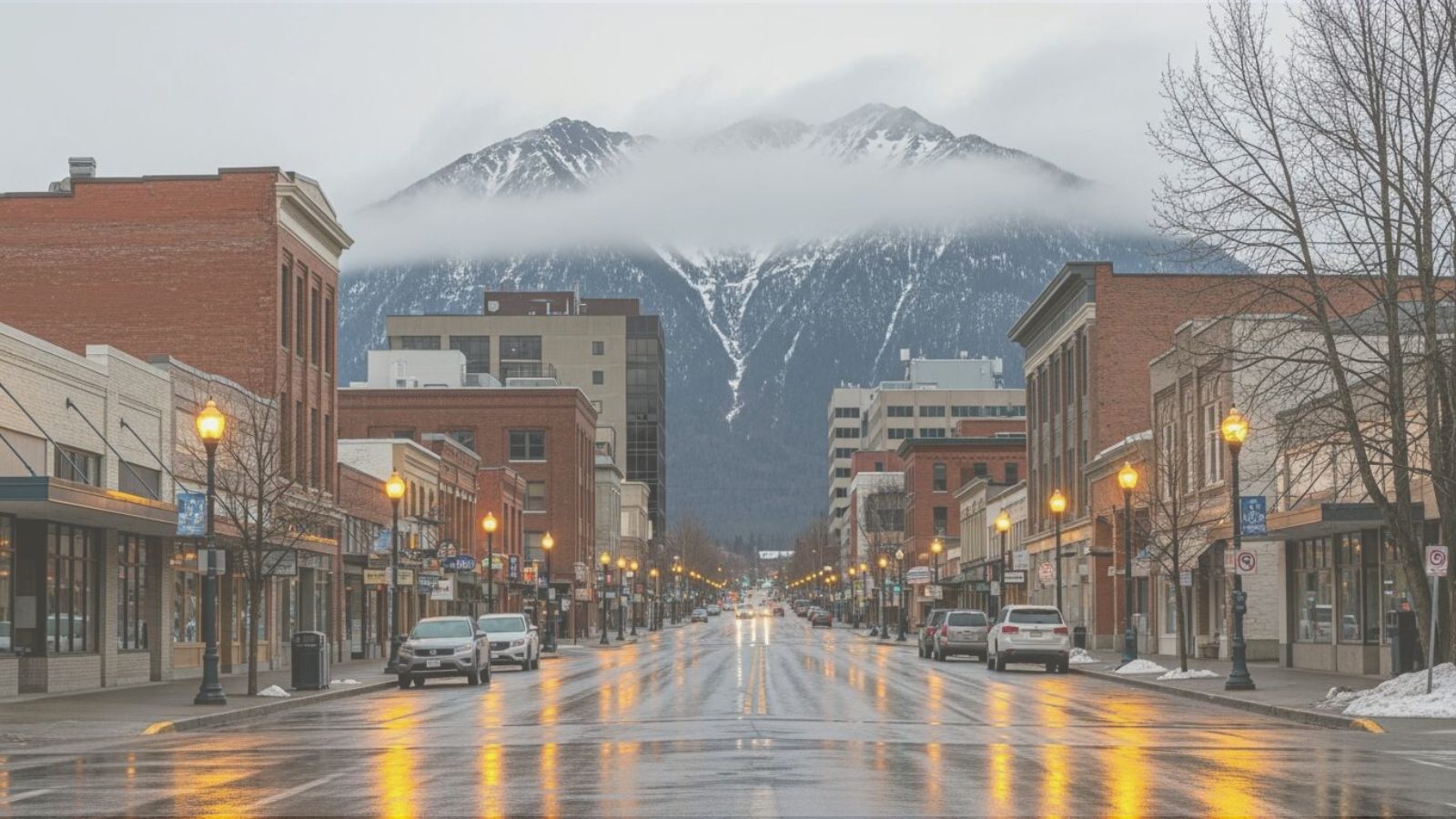
Downtown is the most urban version of Anchorage.

If you work downtown, like being near restaurants and events, and want access to the Coastal Trail, it can make a lot of sense. You also have better access to bus routes than in many other neighborhoods, simply because downtown is a central transit point.

The tradeoff is that downtown Anchorage is not a full-service urban neighborhood in the way people from larger cities might expect. Depending on your exact location, groceries and daily errands may still require planning.

But if your work, social life, and daily rhythm are centered downtown, this is one of the most realistic areas for living without a car.


North Star and Valley of the Moon


North Star and Valley of the Moon sit in a useful middle zone between downtown, Midtown, Spenard, and the Chester Creek Trail.

This area can be surprisingly practical. You can walk or bike to places like AMH, Bear Tooth, restaurants, bars, cafés, and some services. There is a nice centrality to it, especially if your life is split between downtown and Midtown.

The main issue is groceries. Depending on where you are, grocery access may not be as easy as in South Addition. That does not make the area unworkable, but it does mean you need to think carefully about your exact location and routine.

Fireweed is also an interesting corridor to watch. The Fireweed Lane Rehabilitation Project is studying ways to improve motorized and active transportation needs, as well as business circulation and access along the corridor. If that corridor becomes safer and more pleasant over time, it could strengthen the car-light potential of nearby neighborhoods.


Spenard


Spenard is one of Anchorage’s more interesting neighborhoods for people who want character, food, nightlife, and local businesses nearby.

It has restaurants, bars, cafés, entertainment, bus access, and proximity to both Midtown and downtown. But Spenard is also very block-by-block. Some parts feel much more walkable and comfortable than others.

If you want to live without a car in Spenard, exact location matters. Being close to the right stretch of Spenard Road, nearby services, and a useful bus route can make a big difference.

 
Residential walking street in Anchorage Alaska
 

Rogers Park


Rogers Park is not necessarily a self-sufficient car-free neighborhood, but it is a very pleasant neighborhood for walking.

This is where it is important to separate two ideas: walkable for errands versus walkable for daily life and enjoyment.

Rogers Park has cute homes, sidewalks, a more established residential feel, and a sense of neighborhood life. You can walk your dog, take an evening stroll, say hi to neighbors, and feel like you are in a real neighborhood rather than a subdivision designed only around cars.

It is also relatively central, with access to Midtown, UMED, trails, and other parts of Anchorage. But you will probably still need to leave the neighborhood for many errands.

So Rogers Park may not be the easiest place to be fully car-free, but it can still support a more walkable lifestyle than people might assume.


Airport Heights


Airport Heights is similar in that it can be very pleasant for neighborhood walks.

You have sidewalks in many areas, a slightly denser residential pattern than parts of South Anchorage, and a community feel that makes walking more enjoyable. It is also close to the Chester Creek Trail, Russian Jack, and the UMED area, depending on where you are.

Again, this is not necessarily about being able to walk to everything. It is about whether the neighborhood lets you spend more of your daily life outside, on foot, and connected to the area around you.

For some buyers, that matters almost as much as being close to a grocery store.


UMED and University Area


The UMED and University area can work well for a specific type of person.

If you are a student, healthcare worker, university employee, or someone whose daily life is centered around UAA, APU, Providence, ANMC, or nearby institutions, living close to that area can reduce your need for a car.

It is not the most charming walking environment in every direction, but it can be practical if your work or school routine lines up with the location.

Public Transportation in Anchorage: Useful, But Very Location-Dependent


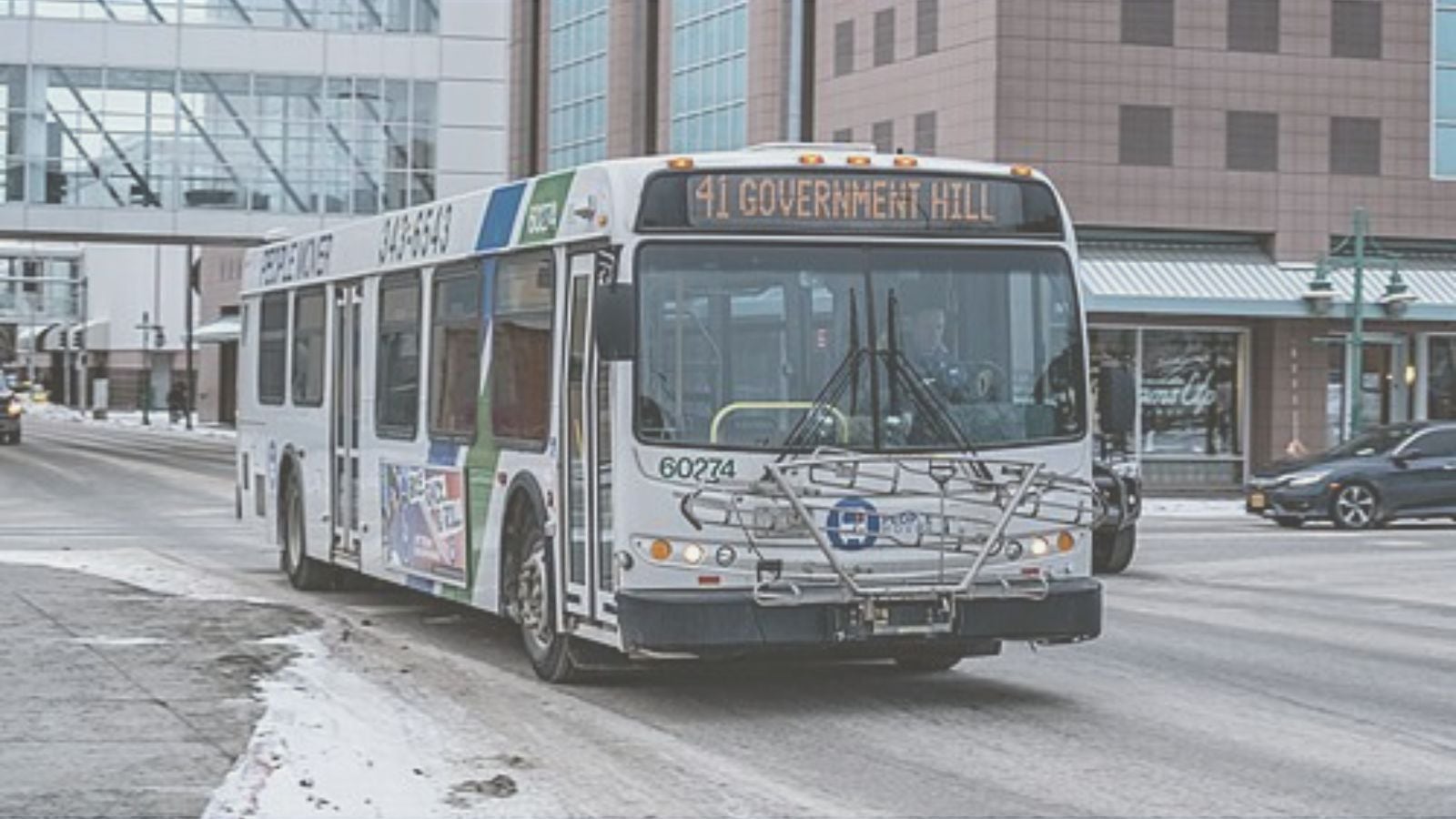
Anchorage does have public transportation through People Mover.

In my own experience taking the bus between Midtown and South Addition, it was honestly better than I expected. The bus was clean, reliable, and easy to track. People Mover has tools for route planning, real-time information, rider alerts, and trip planning that can combine bus service with walking and biking. The system also offers route maps, schedules, bus stops, service alerts, BusTracker, and trip planning tools through its official website.

There is also an mTicket app that allows riders to buy and carry tickets on their phone.

But the bus is still very much a “depends” situation.

My client, who actually lived without a car, had a much more nuanced view. Some routes worked well. Some connections were frustrating. Some delays were common enough that he had to build extra time into his life. In winter, a bus route is only part of the story. You also have to think about whether you can safely and comfortably get to the stop.

That is the key point for buyers.

Do not just ask, “Is there a bus stop nearby?”

Transit Reality Check

Route matters: a nearby stop only helps if it actually connects to your work, groceries, and daily routine.

Transfers matter: two transfers can turn a simple errand into a long trip.

Winter matters: the bus stop has to be usable when sidewalks, berms, ice, and darkness are part of the trip.

Public transportation can absolutely support car-light living in Anchorage. But it works best when your home, work, errands, and lifestyle are aligned with the right routes.

 
People Mover bus route in Anchorage Alaska

Biking Can Change the Equation


Biking makes Anchorage feel much more connected than it looks on a normal street map.

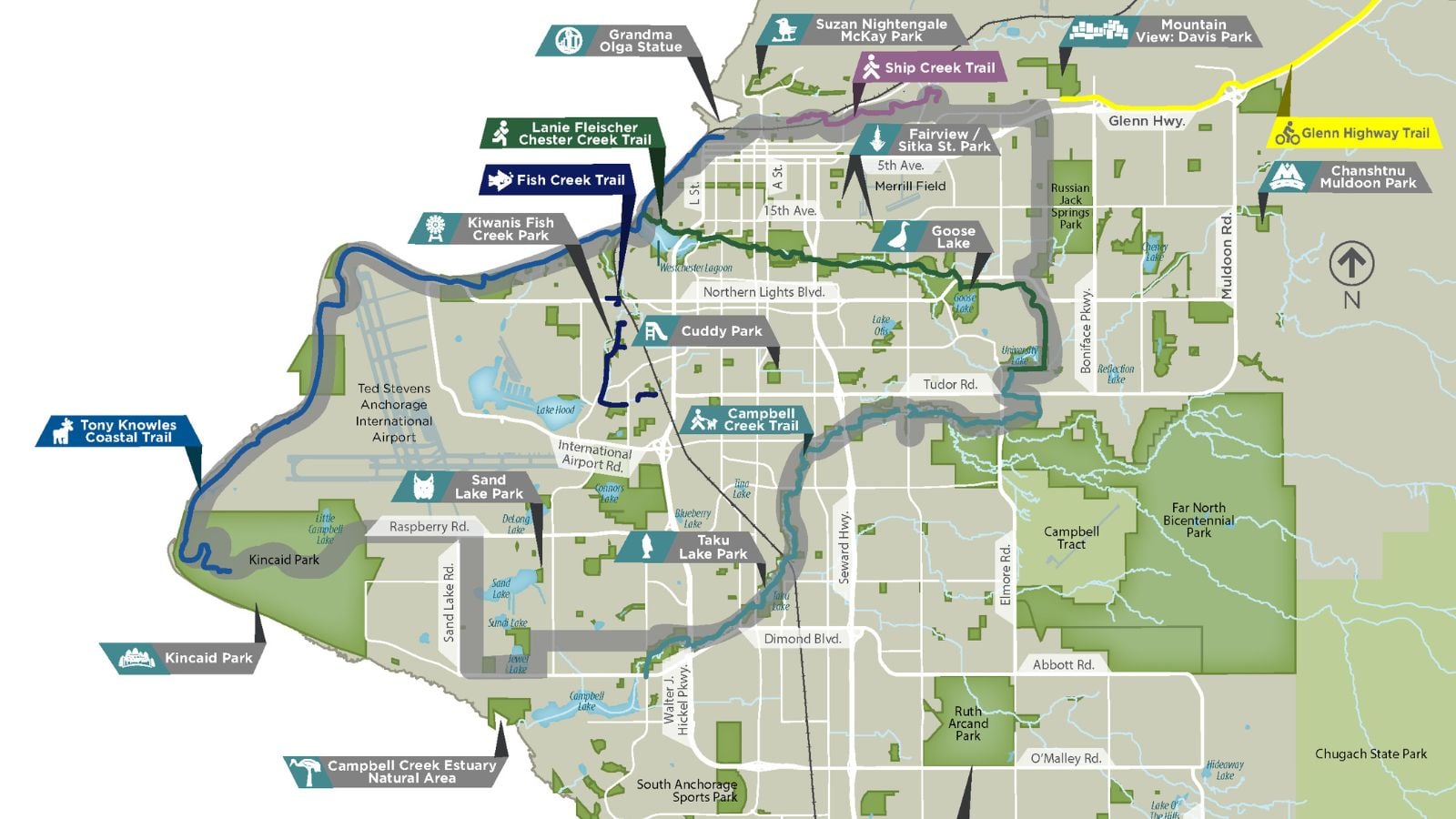
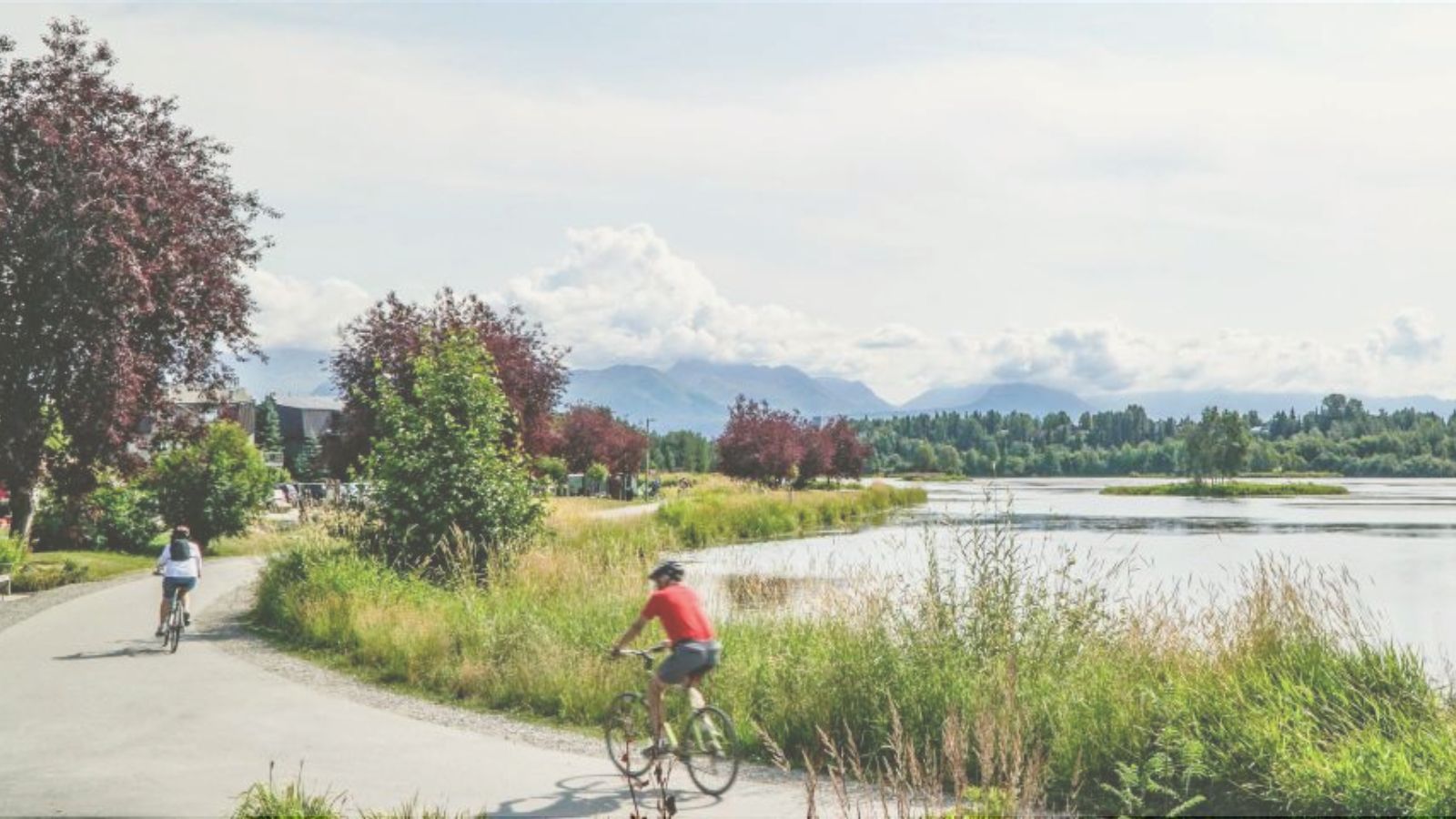
The trail system is one of the reasons why some neighborhoods work better than their basic walkability score might suggest. If you live near the Tony Knowles Coastal Trail, Chester Creek Trail, Campbell Creek Trail, or other key connections, you may be able to move through the city in a way that feels safer, calmer, and more enjoyable than biking only on major roads.

The Tony Knowles Coastal Trail, for example, runs 11 miles from downtown Anchorage to Kincaid Park, which makes it more than just a recreational trail. It is also a major non-motorized corridor.

This matters for real estate.

A home near a trail may be much more functional for a car-light buyer than a home that looks similar on paper but sits in a less connected location. Trail access can change your commute, your exercise routine, your ability to reach parks, and your general sense of freedom.

And in Anchorage, biking is not just a summer thing. Some people bike year-round with the right gear, studded tires, fat bikes, lights, and comfort with winter conditions. That is not for everyone, but for the right person, it can make living with less driving much more realistic.

The city is also making some efforts to support lower-stress walking and biking. The Municipality launched the Anchorage Neighborhood Greenways Program in 2025 to create safer, more comfortable neighborhood streets for people traveling outside of a vehicle, with an emphasis on walking, biking, rolling, and low-stress shared use.

That does not transform Anchorage overnight, but it is a positive sign.

In Anchorage, trail access can make a neighborhood feel much more connected than it looks on a regular road map.
Bike commuting on Anchorage trail system

Winter Is the Real Test


Summer walkability in Anchorage is one thing.

Winter walkability is something else.

In July, you might look at a map and think a 15-minute walk is no big deal. In January, that same walk may involve darkness, ice, snow berms, wind, poor lighting, or sidewalks that have not been cleared the way you hoped.

That does not mean walking is impossible. Plenty of people walk in Anchorage all winter. But winter changes the calculation.

A neighborhood that works without a car in Anchorage needs more than proximity. It needs practical winter usability. That means looking at sidewalks, crossings, lighting, snow storage, bus stop access, and how the route feels when conditions are not ideal.

This is one of the things my client opened my eyes to. He knew which sidewalks were usually plowed and which ones became a problem. He knew which routes worked in theory and which ones worked in real life.

That is the kind of knowledge you do not always get from a listing sheet.


Winter Reality Check

Sidewalks: are they usually cleared, icy, blocked, or interrupted?

Bus stops: can you reach them safely after snow or freezing rain?

Groceries: would you still make that walk with snow, darkness, and cold?

Biking: do you have the gear, storage, lighting, and comfort level for winter riding?

Winter sidewalk in Anchorage Alaska

Who Can Realistically Live Without a Car in Anchorage?


Living without a car in Anchorage is most realistic for people whose lives are already somewhat concentrated.

Car-Free Works Best For

Remote workers: especially if they live near groceries, trails, coffee, and occasional rideshare access.

Downtown workers: especially from Downtown, South Addition, or Bootleggers Cove.

Students and healthcare workers: especially near UAA, APU, Providence, ANMC, and UMED.

One-car households: often the most realistic middle ground in Anchorage.

A serious cyclist may be able to make it work in more neighborhoods, especially with the right trail access and winter setup.

And then there are the hardcore people. The ones who can make almost any neighborhood work because they are patient, organized, physically capable, and willing to deal with inconvenience.

That is real too.

But most people should not build their Anchorage life around the hardest possible version of car-free living. They should choose a neighborhood that makes the lifestyle easier.

Who Probably Still Needs a Car?


Most people in Anchorage will still benefit from having access to a car, even if they do not use it every day.

A car is especially useful if you work outside the Anchorage Bowl, have kids in different schools or activities, need regular access to South Anchorage or Eagle River, or want to spend a lot of time hiking, skiing, fishing, climbing, camping, or getting to trailheads.

This is one of the biggest differences between Anchorage and a more urban city.

You might be able to handle daily errands without a car, but if part of the reason you live in Alaska is to get outside, occasional vehicle access becomes much more valuable. The lifestyle here often extends beyond the neighborhood.

That does not mean you need to drive constantly. But it does mean that a fully car-free life may feel limiting for many outdoor-oriented residents.

The more realistic goal for a lot of people is not “no car ever.”

It is driving less, choosing a neighborhood that supports your routine, and being intentional about when you actually need a vehicle.

What to Look for in a Home if You Want to Drive Less


If you want to live without a car, or simply drive less, you need to evaluate homes differently.

Bedrooms, square footage, finishes, and price still matter. But location becomes even more important.

You want to look at how the home functions in real life.

How close is the nearest grocery store? Is it a pleasant walk or a stressful one? Is there a bus route nearby, and does it actually go where you need it to go? Can you bike safely to work or to a trail? Is there secure bike storage? Are the sidewalks usable? Is the street well-lit? What does the area feel like in winter?

You should also think about the kind of walking you want.

Some neighborhoods are good for errands. Others are good for evening walks. Some are good for biking. Some are good because they are close to trails. Some are good because they put you near work. Those are not all the same thing.

For example, South Addition may offer a stronger mix of groceries, downtown access, trails, and neighborhood life. Rogers Park or Airport Heights may be very pleasant for walking your dog or taking your kids around the block, even if they are not as self-sufficient for errands. North Star may give you access to restaurants, AMH, Bear Tooth, and central Anchorage, but groceries may require more planning.

That is why you should not rely only on a generic walkability score.

You want to understand the property in context.

For most people, the goal in Anchorage is not zero driving. It is choosing a home that lets you drive less without making daily life harder.

Planning a Car-Light Move to Anchorage?

Choosing where to live here is not just about price or commute. It is about daily routines, winter sidewalks, transit access, trail connections, storage, and how much you want to drive day to day.

If you are trying to figure out which Anchorage neighborhoods fit a lower-car lifestyle, I’m happy to help you think it through.

Ask a Local Before You Move
Car-light living in an Anchorage neighborhood

Final Verdict: Is Anchorage a Good City for Car-Free Living?

Anchorage is not an easy city to live in completely without a car.

But it is more possible than many people think.

If you choose the right neighborhood, understand the bus system, use the trail network, prepare for winter, and build your routine around realistic destinations, you can live car-free or close to it. Some people do. My client proved that to me in a very practical, lived-in way.

For most people, though, the better goal is probably car-light living.

That means choosing a home where you can walk to some daily needs, bike or bus when it makes sense, enjoy your neighborhood on foot, and still have occasional access to a vehicle when Alaska life calls for it.

In Anchorage, the location of your home matters as much as the home itself. Maybe more, if you are trying to drive less.

A good neighborhood is not just a place that looks nice on a map. It is a place that supports how you actually live, in July and in January.


Living Without a Car in Anchorage FAQ


Yes, but it depends heavily on where you live, where you work, and how comfortable you are with walking, biking, transit, rideshare, and winter conditions. For most people, car-light living is more realistic than fully car-free living.

Anchorage has walkable pockets, especially in central neighborhoods, but it is not uniformly walkable citywide. Walkability varies a lot by neighborhood, season, and access to services.

South Addition, Downtown, Bootleggers Cove, Spenard, North Star, Valley of the Moon, and parts of the UMED area are some of the better options. Rogers Park and Airport Heights can also be very pleasant for walking, even if they are less self-sufficient for errands.

Yes. Anchorage has the People Mover bus system, with route maps, schedules, service alerts, BusTracker, trip planning tools, and mobile ticketing options. Whether it works well for you depends on your specific route and routine.

Yes. Anchorage has a strong trail network, and biking can be practical in certain neighborhoods. Winter biking is also possible, but it requires the right gear, comfort level, and planning.

Most people benefit from having access to a car, especially for outdoor recreation, big errands, winter flexibility, and trips outside the Anchorage Bowl. But some people can live without one if they choose their location carefully.

Check out this article next

Moving to Anchorage, Alaska: What You Need to Know Before You Relocate in 2026

Moving to Anchorage, Alaska: What You Need to Know Before You Relocate in 2026

You can spend weekends on Zillow, YouTube, Reddit, and relocation blogs and still not really understand what it feels like to live in Anchorage.That was…

Read Article
About the Author
Rod Skowronek
Roderick Skowronek is an Anchorage-based Realtor, investor, and property manager with a background in finance and real estate investing. He helps buyers, sellers, and investors make thoughtful real estate decisions with clear numbers, practical guidance, and a strong understanding of Alaska lifestyle.